Decades of dermatological research have narrowed anti age skin care down to a handful of active ingredients that genuinely slow visible ageing, and a much larger pile of marketing claims that don’t. This guide cuts through the noise, organises what works by decade, and gives you a routine you can actually follow.
Anti Age Skin Care in One Glance
What actually works for anti ageing comes down to four pillars, each backed by clinical evidence. The American Academy of Dermatology emphasizes the importance of daily sunscreen, moisturization, vitamin C, and retinoids as the foundation of any effective skincare routine. Everything else is optional.
- Daily SPF 30–50 – broad-spectrum, every day, all year, including overcast UK winters.
- Vitamin C serum in the morning – antioxidants that defend against UV rays, pollution, and oxidative stress.
- A retinoid at night – retinol, retinaldehyde, or prescription tretinoin to stimulate collagen and speed cell turnover.
- Consistent hydration and barrier support – hyaluronic acid, ceramides, and nourishing lipids to maintain moisture and keep skin resilient.
The basic components of an effective anti ageing routine are cleansing, treating, moisturizing, and protecting. Fine lines, uneven skin tone, and rough skin texture respond well to these proven actives. Trendy ingredients like “stem cell complexes” or proprietary botanical blends have much weaker evidence – a systematic review of cosmeceuticals found only vitamin C and retinol earned Grade A recommendations for efficacy.
The rest of this article breaks routines down by decade – 30s, 40s, and 50+ – so you can scan to the section that matches where your skin is today.
How Skin Ageing Really Works
Skin ageing is driven by both biology and lifestyle. Genetics, hormonal shifts, and natural cellular slowdown combine with environmental factors like sun exposure and pollution to produce the visible signs of ageing. No single cause dominates, which is why effective routines target multiple pathways.
Collagen loss is the structural headline. Collagen is the primary structural protein that keeps skin firm and plump. Collagen production slows by approximately 1% per year after age 25. That loss compounds: by your mid-30s you may have lost around 10%, and by your 40s the deficit reaches 20–35%. The result is wrinkles, loss of skin elasticity, and a face that naturally loses volume over time.
Slower cell turnover is less dramatic but just as visible. In your twenties, the epidermis renews roughly every 14–21 days. By your 30s, that slows to 28–35 days. Skin’s cell turnover declines with age, causing dullness, rougher surface texture, and a complexion that looks less bright after disrupted sleep or stress.
Key accelerators speed the process beyond what biology alone would produce. Environmental factors contribute to fine lines and uneven skin tone – UV damage is the largest extrinsic driver, triggering reactive oxygen species that degrade collagen and elastin. Pollution adds oxidative stress. If you smoke, you’re accelerating collagen breakdown directly. High-sugar diets create advanced glycation end-products that cross-link collagen fibres, making them brittle and dysfunctional.
Hormonal shifts, especially around menopause, thin the skin, reduce oil production, and increase sensitivity. Skin becomes more prone to dehydration as estrogen levels drop. Post-menopause, the collagen decline steepens dramatically – a point covered in detail in the 50+ section below.

Your 30s: Lock In Prevention and Early Repair
Your 30s are the decade where prevention pays the highest dividends. The first signs of ageing appear – fine lines around the eyes, mild pigmentation from past sun exposure, slightly slower recovery from late nights – but the structural damage is still shallow enough to address with a consistent, simple routine.
Cell turnover has slowed perceptibly. You might notice your complexion looks duller on Monday mornings, that forehead lines linger longer after expressions, and that old sun damage starts surfacing as faint dark spots. The jawline may begin to soften subtly.
A daily routine for your 30s should stay simple:
- Morning: Gentle cleanser (cleansers should be gentle and not strip the skin barrier to maintain skin health), antioxidant serum with vitamin C, lightweight moisturiser, broad-spectrum SPF 30–50.
- Evening: Cleanse, low-strength retinol or retinal 2–3 nights per week, barrier-friendly moisturiser.
In your 30s, introduce antioxidants like vitamin C daily – this is where real results in prevention begin. Introducing new active ingredients gradually can prevent skin irritation and improve tolerance. Keep to one strong active per night to avoid over-exfoliation, and a good moisturizing routine supports the skin barrier during the introduction of active ingredients like retinol.
Niacinamide at 5–10% works as a multi-tasker for enlarged pores, redness, and uneven tone without irritation, and pairs well alongside either vitamin C or retinol.
Key Anti Age Ingredients for Your 30s
- Vitamin C (10–20%): Brightens uneven skin tone and provides antioxidant protection against pollution and UV damage. Research confirms that L-ascorbic acid in properly formulated vehicles improves photoaging and pigmentation. Stability matters – look for opaque, airless packaging.
- Retinol / retinal: Collagen-builders that gently speed up cell turnover. Expect visible texture improvement after 8–12 weeks of regular use. Medik8 Intelligent Retinol contains 0.2% retinol for beginners and is a sensible starting point.
- Niacinamide (5–10%): Strengthens the barrier, controls oil, and helps smooth texture. Well-tolerated by most skin types.
- Hyaluronic acid: Hyaluronic acid is key for hydrating anti-aging products. Applied to damp skin, it delivers long lasting hydration that keeps dehydration lines from looking like premature wrinkles. It won’t restore lost collagen, but it plumps the surface effectively.
Your 40s: Targeted Repair for Lines and Uneven Skin Tone
The 40s are the repair and strengthen decade. Structural changes become more obvious: deeper lines around the eyes and mouth, early loss of jawline definition, darker dark spots, and patchy tone that foundation can no longer fully mask. For women, perimenopause often begins here, making skin more reactive and prone to less moisture retention.
By your 40s, retinol should be a cornerstone of your routine. A well-formulated vitamin C serum every morning under SPF 50 addresses dullness, while retinoids become the main night treatment – used most nights if tolerated.
For stubborn uneven skin tone, consider adding pigment-targeting actives like azelaic acid (10–20%) or a gentle AHA toner on alternate nights. Peptides are short chains of amino acids that may help support collagen and elastin production, making peptide serums a useful addition when retinol alone isn’t addressing firmness.
Richer, ceramide-based moisturisers in the evening compensate for drier, more reactive skin. Elemis Pro-Collagen creams reduce fine lines in 14 days, offering a visible boost while your retinoid works on deeper structural repair. Clocking in extra protection such as tinted sunscreen can help against visible light and pigmentation during the day.
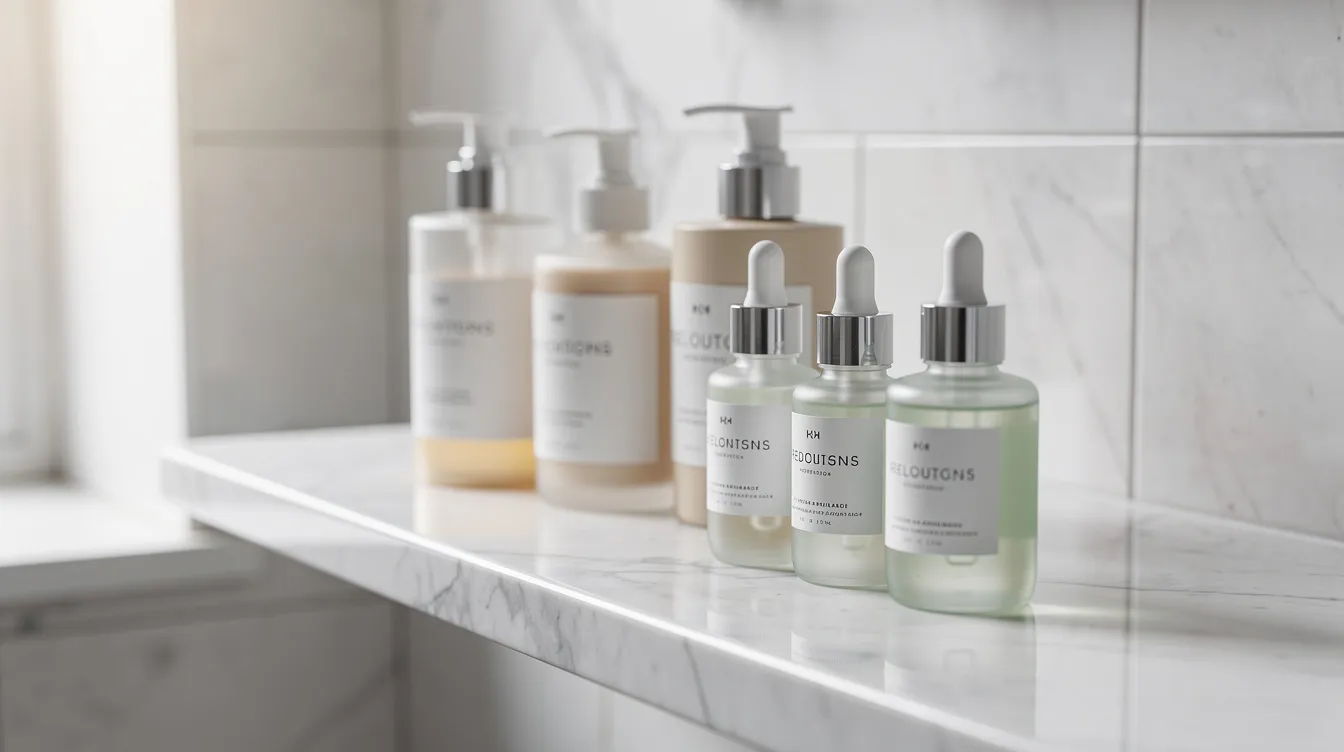
Routine Blueprint for Busy 40‑Something Skin
Morning:
- Cleanse
- Vitamin C serum (antioxidants first)
- Eye cream if needed for crow’s feet
- Lightweight moisturiser
- SPF 50 – broad-spectrum, non-negotiable
Evening:
- Cleanse thoroughly
- Retinol or retinal serum
- Barrier-supporting moisturiser
- Optional: hydrating serum layered underneath if skin feels tight
Alternate nights: Swap the retinoid for a recovery night – no strong actives, only hydration and barrier repair. This balance protects the skin without sacrificing real results.
Realistic timelines:
- Brighter tone and reduced dullness: 4–6 weeks
- Visibly smoother wrinkles and firmer feel: 3–6 months
- Deeper structural improvement: 6–12 months with consistent care
Your 50s and Beyond: Restore, Strengthen, Protect
Post-menopause skin needs comfort, barrier support, and collagen maintenance more than aggressive stripping or high-concentration acids. Up to 30% of collagen is lost in the first five years post-menopause, leading to thinning, crepey texture, and more pronounced sagging. The appearance of ageing accelerates, but the right approach can restore resilience.
Dryness increases significantly. Sensitivity heightens. Acids and retinoids that worked fine a decade ago may now cause irritation. The focus shifts: maintain your core actives – vitamin C, a retinoid, and SPF – but adjust frequency and strength downward.
Barrier-repair ingredients become essential. Ceramides help replenish the skin barrier and reduce moisture loss, benefiting dry or sensitive skin. Squalane, cholesterol, urea, and essential fatty acids all contribute to keeping mature skin resilient rather than fragile. Use fragrance-free, rich textures at night to minimise transepidermal water loss and enhance a supple, plump appearance.
Bakuchiol is a plant-derived alternative to retinol worth considering at this stage. Bakuchiol offers retinol-like benefits without irritation – it reduces wrinkles and improves skin texture, does not cause dryness or sensitivity like retinol, and can be used morning and night without irritation. For women who’ve found retinol too harsh post-menopause, bakuchiol provides a practical bridge.
Comfort-First Routine Priorities for Mature Skin
- Morning: Gentle, nourishing cleanser. Antioxidant serum (vitamin C or a stable derivative). Hydrating day cream with SPF 50 to defend against UV rays and protect remaining collagen. Daily SPF of at least 30 is essential for all ages, but SPF 50 is the stronger choice for mature skin with less natural defence.
- Evening: The “sandwich” approach – moisturiser first, then retinoid, then moisturiser on top – buffers the retinoid and minimises dryness while maintaining anti ageing benefits.
- Recovery nights: Integrate soothing actives like panthenol, oat extract, or bisabolol on nights off from retinol to calm redness and tightness. Honey is known for its skin-repairing properties and appears in some overnight masks formulated for mature skin.
- Professional treatments like gentle peels or microneedling can be considered to strengthen and stimulate collagen, but daily home care remains the foundation.
Consistency, not aggression, is what supports healthier, more even, and less fragile skin long term.

Non‑Negotiable Habits at Every Age
Some principles don’t change whether you’re 30, 45, or 65:
- Daily broad-spectrum SPF 30–50. Using a broad-spectrum sunscreen is crucial for preventing UV-induced collagen breakdown and premature aging. SPF 50 protects against 80% of visible skin aging. This is the single most effective step to minimise wrinkles, dark spots, and sagging.
- One antioxidant serum, one night repair product. Stick with them. Frequent product-swapping undermines the compounding benefits that come from regular use over months.
- Lifestyle is non-optional. Sleep, smoking, alcohol, and high-sugar diets have a direct impact on collagen and skin texture. If you smoke, quitting does more for your face than any serum.
- Less but better. Avoid layering too many strong acids, scrubs, and peels that weaken the barrier over time. A youthful complexion comes from a routine powered by restraint, not excess.
- Reassess every 6–12 months. Seasons, hormonal phases, and ageing itself change what your skin needs. Adjust strength, frequency, and formulation accordingly.
How to Choose Anti Age Products for Your Skin Type
The best anti ageing routine is the one tailored to your skin type and tolerance. The active ingredients stay the same – what changes is the vehicle, strength, and frequency.
| Skin Type | Cleanser | Serum Focus | Moisturiser | Retinoid Approach |
|---|---|---|---|---|
| Dry | Creamy, non-foaming | Hydrating (HA, glycerin) | Rich, occlusive | Low-strength, buffered |
| Combination/Oily | Gel or water-based | Niacinamide, lightweight vitamin C | Oil-free, non-comedogenic | Standard strength, gel base |
| Sensitive/Redness-prone | Fragrance-free, minimal | Barrier-first (ceramides, niacinamide) | Soothing, fragrance-free | Very slow introduction, encapsulated forms |
For sensitive or redness-prone skin, bakuchiol can be used as an alternative – it delivers retinol-like benefits to improve skin texture without the sensitivity trade-off.
How to patch test: Apply your new product to the jawline or behind the ear for 24–48 hours. Start with 1–2 nights per week, then build frequency as tolerance allows over several weeks. If irritation persists beyond initial adjustment, reduce frequency rather than pushing through.
Look at formulation over price. A well-formulated serum at £10 can outperform a poorly stabilised one at £90. Check for: concentration clearly stated, stable packaging, known-effective derivatives, and absence of unnecessary fragrance.
Putting It All Together: Start Where Your Skin Is Today
It’s more important to begin with a modest, reliable skincare routine now than to wait until everything is perfect. Consistency is more important than a complicated anti-aging routine. A clinical trial combining retinol with antioxidants showed improvements in hydration, skin elasticity, and texture in just 8 weeks – proof that starting simple delivers real results.
The path is straightforward: understand where your skin is by decade and hormonal status, choose 2–3 proven actives, protect with SPF every morning, and adjust as your skin changes. Smoother skin texture and a brighter, more even skin tone come from months of steady care, not overnight fixes.
Reassess your routine every 6–12 months. What worked in your early 40s may need adjusting by your late 40s. What felt comfortable before menopause may need gentler formulations after. Your skin will tell you – listen to it, and keep the four pillars in place.
Start with what your face needs today. Build from there.